One of these northern rebellions against the warlords Yen Hsi-shan and Feng Yuxiang in 1930 almost bankrupted the government and cost almost 250,000 casualties. From 1949 until his death, Chiang led the KMT government in exile in Taiwan, which many countries continued to recognize as Chinas legitimate government. A month of mourning was declared during which the Taiwanese people wore black armbands. Sun and his wife Song Qingling narrowly escaped under heavy machine gun fire, only to be rescued by gunboats under the direction of Chiang Kai-shek. During this time his attentions turned to Sun Yat-sen, a revolutionary and political leader of the time (today known as the "father of modern China"). The Communists regrouped in Jiangxi and established the Chinese Soviet Republic. In August of the same year, Chiang sent 500,000 of his best trained and equipped soldiers to defend Shanghai. With this resolution, the representatives of Chiang Kai-shek's government-in-exile were expelled from the UN. After Sun Yat-sens death and prior to the civil war, he expelled Communists from the party and led a successful campaign against local warlords, giving him control of the three major cities of Canton, Nanjing, and Beijing. The peasants formed almost 90 percent of Chinas population, though, and it was their support, as demonstrated by the communist victory, which proved crucial in once more establishing a strong central government that could achieve the modern unification of China. Finally, it can be said that Chiang lost China because he had no higher vision or coherent plan for making the deep social and economic changes needed to bring Chinese society into the 20th century. It was here that the idea was born to overthrow the Qing Empire, and when the Wuchang Uprising took place in 1911, he returned to join the revolutionary forces. Sun regained control in Guangzhou in early 1924, with the help of mercenaries from Yunnan, and accepted aid from the Comintern. Though he failed in a number of respects, he left behind a prosperous economy that grew into a genuine democracy. Chiang Kai-shek, Wade-Giles romanization Chiang Chieh-shih, official name Chiang Chung-cheng, (born October 31, 1887, Fenghua, Zhejiang province, Chinadied April 5, 1975, Taipei, Taiwan), soldier and statesman, head of the Nationalist government in China from 1928 to 1949 and subsequently head of the Chinese Nationalist government in exile on Taiwan. Chiang's Chonqing government was ill-equipped to reassert its authority in eastern China. However, what he had initially pursued was the modernization of China. Chiang Kai-shek's second wife, Soong Mei-ling, became a significant political figure in her own right. Chiang Kai-shek is well-remembered as the leader of the anti-Communists and invested many years of his life in the pursuit of its overthrow. in accordance with New World Encyclopedia standards. In Shanghai, Chiang also cultivated ties with the criminal underworld dominated by the notorious Green Gang and its leader Du Yuesheng. Chiang initially maintained his position as republican Chinas paramount leader by shrewdly playing off provincial warlords and possible Nationalist rivals against each other and later by his adroit cultivation of American military, diplomatic, and financial support for his regime. From his purge of the Nationalists communist partners in 1927 and his subsequent alliance with the landowning and mercantile classes, Chiang inexorably followed an increasingly conservative path that virtually ignored the plight of Chinas oppressed and impoverished peasantry. Chiang attended private school, where he learned the Chinese classics. When his son Chiang Ching-kuo died in 1988, he was also entombed in a separate mausoleum in nearby Touliao. Chiang is known for his vigorous anti-communist stance, having founded the World Anti-Communist League (WACL). Soong (1894-1971) exiled themselves to the United States. This interest eventually led him towards his path of leadership. One thing is certain, while many locals recognize him as one of the founding fathers of the Republic of China, Chiang Kai-shek is a divisive figure in modern-day Taiwan. Since new elections could not be held in their Communist-occupied constituencies, the members of the KMT-dominated National Assembly held their posts indefinitely. His international position was weakened considerably in 1971, when the United Nations expelled his regime and accepted the Communists as the sole legitimate government of China. Chiang's actions earned him the support and financial backing of the Shanghai business community, and maintained him the loyalty of his Whampoa officers, many of whom hailed from Hunan elites and were discontented by the land redistribution Wang Jingwei was enacting in the area. During the Chinese Civil War (19261949), Chiang attempted to eradicate the Chinese Communists but ultimately failed, forcing his government to retreat to Taiwan (The Republic of China) where he continued serving as the President of the Republic and Director-General of the KMT for the remainder of his life. According to KMT political orthodoxy, this period thus began the period of "political tutelage" under the dictatorship of the Kuomintang. Chiang grew up in an era in which military defeats and civil wars among warlords had left China destabilized and in debt, and he decided to pursue a military career to save his country. Though much of the urban areas were now under the control of his party, the countryside still lay under the influence of severely weakened yet undefeated warlords and communists. That same year, Sun sent Chiang Kai-shek to Moscow to spend three months studying the Soviet political and military system. On April 12, 1927, Chiang began a swift attack on thousands of suspected Communists. Please refer to the appropriate style manual or other sources if you have any questions. Chiang was recognized as one of the "Big Four" Allied leaders along with Roosevelt, Churchill, and Stalin and traveled to attend the Cairo Conference in November 1943. Chiang resigned as President on January 21, 1949, as KMT forces suffered massive losses against the communists. In 1918 he reentered public life by joining Sun Yat-sen, the leader of the Nationalist Party, or Kuomintang. Understanding the Western mind and being a skilled negotiator, in February 1943, she became the first Chinese national, and the second woman, to ever address a joint session of the U.S. House and Senate, making the case for strong U.S. support of China in its war with Japan. However, here are some of the most important facts about Taiwans longest-serving leader. Let us know if you have suggestions to improve this article (requires login). He served in the revolutionary forces, leading a regiment in Shanghai under his friend and mentor Chen Qimei. Chiang Kai-shek, though his ideals ultimately failed, was a man of noble ideals who loved his people and lived his life seeking for a better homeland for them. After uniting the nomadic tribes of the Mongolian plateau, he conquered huge chunks of central Asia and China. His power was almost absolute. China fought Japan on its own for more than four years, until the Allies (with the exception of the Soviet Union) declared war on Japan in 1941. He continued his classical studies until the age of 17, when he enrolled in a modern school. This had a great impact on his nation, establishing organizations in businesses and schools. Across the Taiwan Straits on the mainland, more than one million Chinese were murdered during the first cultural revolution of 1949, and some estimates place the number as more than 27,000,000 deaths from starvation in the famine which lasted from from 1959 through 1961. Chiang's corpse was put in a copper coffin and temporarily interred at his favorite residence in Cihhu, Dasi, Taoyuan County. He had suffered a major heart attack and pneumonia in the months before, and died from renal failure aggravated by advanced cardiac malfunction. He attempted to unify his divided nation, and to stabilize and develop it as well. With the outbreak of the Wuchang Uprising in 1911, Chiang Kai-shek returned to China to fight in the revolution as an artillery officer. Yao raised the adopted Wei-kuo. The morale and effectiveness of his armies had decayed during their enforced passivity in southwestern China, while the communists had built up large, battle-hardened armies on the strength of their appeal to Chinese nationalist sentiment. The U.S. suspended aid to Chiang Kai-shek for much of the period of 1946 to 1948, in the midst of fighting against the People's Liberation Army, led by Mao Zedong. Kublai (also spelled Kubla or Khubilai) relegated his Chinese subjects read more, Mongol leader Genghis Khan (1162-1227) rose from humble beginnings to establish the largest land empire in history. This agreement eventually broke down, and Chiang fought both Mao and the Japanese. His wife acted as his translator and adviser. In fact, the constitution only allowed for two terms in power, but with martial law as his excuse, Chiang could rule indefinitely. In December 1936, Chiang flew to Xi'an to coordinate a major assault on People's Liberation Army (Red Army) forces holed up in Yan'an. Chiang Kai-shek's legacy was incomplete. Upon his defeat, Chiang fled with the remnants of his Nationalist government to Taiwan, which had been turned over to the Nationalist government after the defeat of Japan according to terms agreed upon in Cairo in 1943. 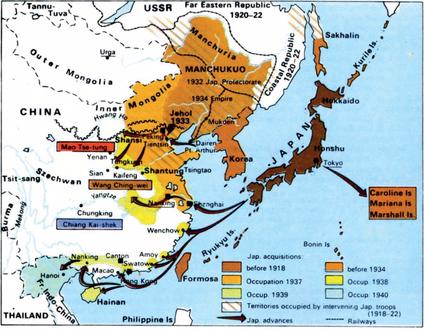 In 1915, Chen Qimei, Sun Yat-sen's chief lieutenant, was assassinated by agents of Yuan Shikai and Chiang succeeded him as the leader of the Chinese Revolutionary Party in Shanghai. Became President of Taiwan until his death in 1975. " Its often forgotten that without the Communists help, Chiang would never have survived as a political force. In 1928, Chiang was named Generalissimo of all Chinese forces and Chairman of the National Government, a post he held until 1932 and later from 1943 until 1948. Many countries continued to recognize Chiangs government in exile as the legitimate Chinese government, and it would control Chinas seat in the United Nations until Chiangs death.
  They were evacuated to Taiwan, where they established a government-in-exile and dreamed of retaking the mainland, never foreseeing that it was to be their last time on their home soil. Chiang served in the Imperial Japanese Army from 1909 to 1911. Chen's autobiography disclaims the idea that she was a concubine, claiming that by the time she married Chiang, he had already been divorced from Mao, making her his wife. This drive ended only in 1928, when his forces entered Beijing, the capital. Alternate titles: Chiang Chieh-shih, Chiang Chung-cheng, Jiang Jie-shi, Jiang Jieshi. He then established National Government in Nanking, supported by conservative allies (including Hu Hanmin). Under Chiang's direction, Li was later formally impeached by the Control Yuan. Tolerant of the hardships they faced following his father's death, the young Chiang developed an enthusiasm for learning. The Republic was set up in Nanjing and in 1912 the Kuomintang Party under Sun was founded. Some sections of the army felt that Chiang spent too much time worrying about maintaining his power in the party when he should have been focusing on the Japanese invasion of Manchuria. When Hu Han-min established a rival government in Guangzhou in 1931, Chiang's government was nearly toppled. A Buddhist, Chiang was eleven years her elder. Yen), who was in 1978 replaced by Chiangs son Chiang Ching-kuo. On the mainland, however, Chiang's death was met with little apparent mourning and newspapers gave the brief headline "Chiang Kai-shek Has Died.". Corrections? For its efforts, China earned inclusion among the Big Four powers, and Chiangs international reputation skyrocketed. Despite the democratic constitution, the government under Chiang was a politically repressive and authoritarian single-party state, consisting almost completely of non-Taiwanese mainlanders; the "Temporary Provisions Effective During the Period of Communist Rebellion" greatly enhanced executive power and the goal of "retaking the mainland" allowed the KMT to maintain its monopoly on power and to outlaw opposition parties.
  In 1979, four years after Chiang died, the United States broke off diplomatic relations with Taiwan and established full relations with the Peoples Republic of China. With the Communist victory in mainland China in 1949, Mao declared the establishment of the Peoples Republic of China. Meanwhile, Chiang had gone far toward reunifying the country. He went to Japan in 1907 and studied at the Military Staff College. After taking Nanjing in March (and with Shanghai under the control of his close ally General Bai), Chiang was forced to halt his campaign and decided first clean house and break with the leftists. But by that point Chiangs strategy had backfired; his passive stance against the Japanese had lost him the prestige and support among the Chinese populace that the communists ultimately gained by their fierce anti-Japanese resistance. It was an era noted for its initial prosperity and tumultuous final years, and for being only the second time that China was not ruled by the Han people. The conditions for his release included his agreement to form a "United Front" against Japan. In a pairing of much political significance, on December 1, 1927, Chiang married Soong May-ling, the younger sister of Soong Ching-ling, Sun Yat-sen's widow, and thus positioned himself as Sun Yat-sen's brother-in-law. The war had severely weakened the Nationalists both in terms of resources and popularity while the Communists were strengthened by aid from Stalin and guerrilla organizations extending throughout rural areas. The Communists were operating their own opposition government from rural strongholds, while war with Japanwhich seized Manchuria in 1931seemed imminent. After these excursions into public life, Chiang lapsed into obscurity. After takeover of the Republican government by Yuan Shikai and the failed Second Revolution, Chiang, like his Kuomintang comrades, divided his time between exile in Japan and haven in Shanghai's foreign concession areas. 2022 A&E Television Networks, LLC. Chiang Fang-liang and Soong May-ling had agreed, in 1997, that the former leaders be first buried but still be moved to mainland China in the event of reunification. In the context of the Cold War, most of the Western world recognized this position and the ROC represented China in the United Nations and other international organizations until the 1970s.
  The decade of 1928 to 1937, was one of consolidation and accomplishment for Chiang's government. Meanwhile a new Constitution promulgated in 1947, and Chiang was elected by the National Assembly to be President. It was they who convinced the officers to release Chiang and allow him to take control of the government once again, though they made him agree to stop his campaign against the Communists and to lead the fight against the Japanese. Chiang left his eldest son Ching-kuo in Russia, who would not return until 1937. While married to Mao, Chiang adopted two concubines: In 1920, Chiang met Mayling Soong, who was American-educated and a devout Christian. Though Chiang ranked relatively low in the civilian hierarchy, and Wang had succeeded Sun to power as Chairman of the National Government, Chiang's deft political maneuvering eventually allowed him to emerge victorious. Having wrested power from the Qing, the revolutionists had lost it to indigenous warlords; unless they could defeat these warlords, they would have struggled for nothing. In 1943, his Western-educated wife, Soong Mei-ling, became the first Chinese and only the second woman to address a joint session of the U.S. Congress, when she asked for increased U.S. aid for China in the Sino-Japanese War. ISBN links support NWE through referral fees. When revolution in his homeland became evident in 1911, he returned to China where he devoted his life seeking to stabilize and develop the nation, though at times he did this from a point of exile. Kung and T.V. Chiang, a fervent patriot, had the adaptability to switch from political to military leader and back again. When civil war broke out in China, Chiang expected help from the allies, but after a long campaign against both the Japanese and the Germans, the US and Britain were reluctant to get involved in a civil war, preferring instead to encourage a peace deal between the two sides.
  Televisions ran in black-and-white while all banquets or celebrations were forbidden.

propeller pronunciation